

The short answer
Titanic struck an iceberg at 11:40 pm on 14 April 1912 and sank at about 2:20 am on 15 April, 2 hours and 40 minutes later. About 1,500 of the roughly 2,224 people aboard died, largely because her 20 lifeboats had room for only about 1,178 people.

If Titanic had simply arrived in New York, she would be remembered today as one large liner among many, a footnote in the history of early twentieth-century shipbuilding.
It is the sinking that made her famous: a ship widely believed to be unsinkable, lost on her first voyage through a chain of bad luck and poor decisions. That story still grips people more than a century later.
This guide explains, in plain language, how, why, when and where Titanic sank.

How did the Titanic Sink?
Many things contributed to the disaster, but the fatal blow came at 11.40 pm on 14 April 1912, when Titanic struck an iceberg that damaged her hull along the starboard side. She sank less than three hours later. Read on for the events of that night in detail.
“Deeply regret to advise you TITANIC sank this morning after collision with an iceberg, resulting in a serious loss of life. Full particulars later.”
J. Bruce Ismay, Director of the White Star Line upon his return to New York.
WHEN DID TITANIC SINK?
Titanic sank at about 2.20 am on Monday 15 April 1912, two hours and forty minutes after hitting the iceberg in the North Atlantic. The collision opened up the first five of her sixteen watertight compartments to the sea, and for a ship of her size she went down remarkably quickly.
About 2,224 people were on board. Roughly 710 of them got away in the lifeboats and were picked up by RMS Carpathia, and about 1,500 died. Most of the dead were men, because women and children were given priority for the limited lifeboat places. Second-class men fared worst of all: more than nine in ten of them died. The largest numbers of deaths were among third-class passengers and the crew.
With better rules, better training and more caution, the disaster could have been avoided. Its aftermath changed shipbuilding and safety at sea on both sides of the Atlantic, so that a loss on this scale would be far less likely to happen again.
The sinking also shook public confidence at a time when crossing the ocean by liner was becoming normal for ordinary travellers, and it showed how badly things could go wrong at sea.
Most historians see the sinking as a mix of bad luck and bad decisions. The timeline below follows the events of 14 and 15 April 1912.
RMS TITANIC SINKING JOURNAL: THE FINAL HOURS OF TITANIC
Sunday, April 14: Afternoon to Evening
The weather on Sunday 14 April could hardly have been better for sailing. Titanic was making good speed across a flat, calm sea. Second Officer Charles Lightoller later said the sea was like glass, which, as it turned out, made icebergs harder to see.
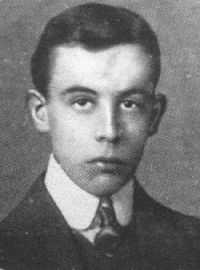
While passengers enjoyed Sunday lunch, the two Marconi wireless operators, Jack Phillips and Harold Bride, were busy sending passengers’ private messages. Sending a telegram from the world’s largest liner was a novelty, and wealthy passengers were making the most of it.
Titanic carried one of the most powerful wireless sets afloat. The operators were employed by the Marconi Company rather than White Star, and their main job was to send passengers’ paid messages. They were also working through a backlog, because the set had broken down on the Friday night and taken hours to repair.
During the day Titanic received at least six warnings of ice from other ships. Not all of them reached the bridge. Captain Smith passed one, from the Baltic, to Bruce Ismay, the chairman of White Star, and another was posted in the chart room for the officers.

Titanic did not slow down, which was normal practice for liners in clear weather at the time. Smith did delay the ship’s planned turn towards New York, which took her slightly further south than usual, possibly to avoid the ice.
Lightoller took over the watch at 6 pm. As the temperature fell sharply, most passengers stayed inside, away from the freezing decks.
Between 7 pm and 10 pm the air temperature dropped by about six degrees Celsius to around freezing, a sign that the ship was getting close to ice.
“The sea was like glass”
Second officer Charles Lightoller
Captain Smith spent part of the evening at a dinner party in the first-class restaurant hosted by the Widener family of Philadelphia.
At about 8.55 pm Smith came to the bridge and talked with Lightoller about the calm sea and the cold. The temperature was close to freezing, and Lightoller had already told the carpenter to check the fresh water supply in case it froze overnight.
At about 9.20 pm Smith went to bed. He told Lightoller to call him if conditions became at all doubtful. The lookouts in the crow’s nest were told to keep a sharp watch for ice.
At about 9.40 pm the steamer Mesaba sent a warning of heavy pack ice and large icebergs directly in Titanic’s path. Jack Phillips, who was on duty while Bride slept, was busy sending messages to the land station at Cape Race, Newfoundland, and the warning never reached the bridge.

Phillips was tired after a long shift and under pressure to clear the backlog of passenger messages. He had no way of knowing that this warning was the most important one of all.
At about 10 pm the lights in the second- and third-class public rooms were dimmed to encourage passengers to go to bed, while conversation, drinks and cigars carried on in first class.
At 10 pm First Officer William Murdoch took over the watch from Lightoller. The two men discussed the conditions and the captain’s instructions, and Lightoller made a final round of the decks before going to bed.
Shortly before 11 pm the Leyland liner Californian, which had stopped for the night because of the ice somewhere to the north, sent a message that came through very loudly in Titanic’s wireless room: “Say, old man, we are stopped and surrounded by ice.” Phillips, interrupted while working Cape Race, replied: “Shut up, shut up, I am busy.” Californian’s wireless operator went to bed soon afterwards.
The lookouts had no binoculars, there was no moon and the sea was so calm that no waves broke at the base of the icebergs. Looking back, it seems extraordinary that Titanic kept going at almost full speed into an area she had been warned was full of ice.
This iceberg, photographed after the sinking, is believed by some to be the one Titanic hit, because witnesses reported a streak of red paint along its base.
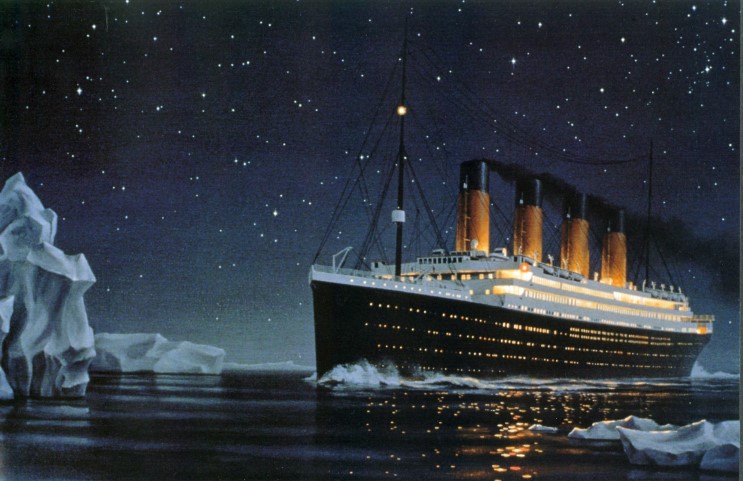
Titanic Strikes an ICEBERG
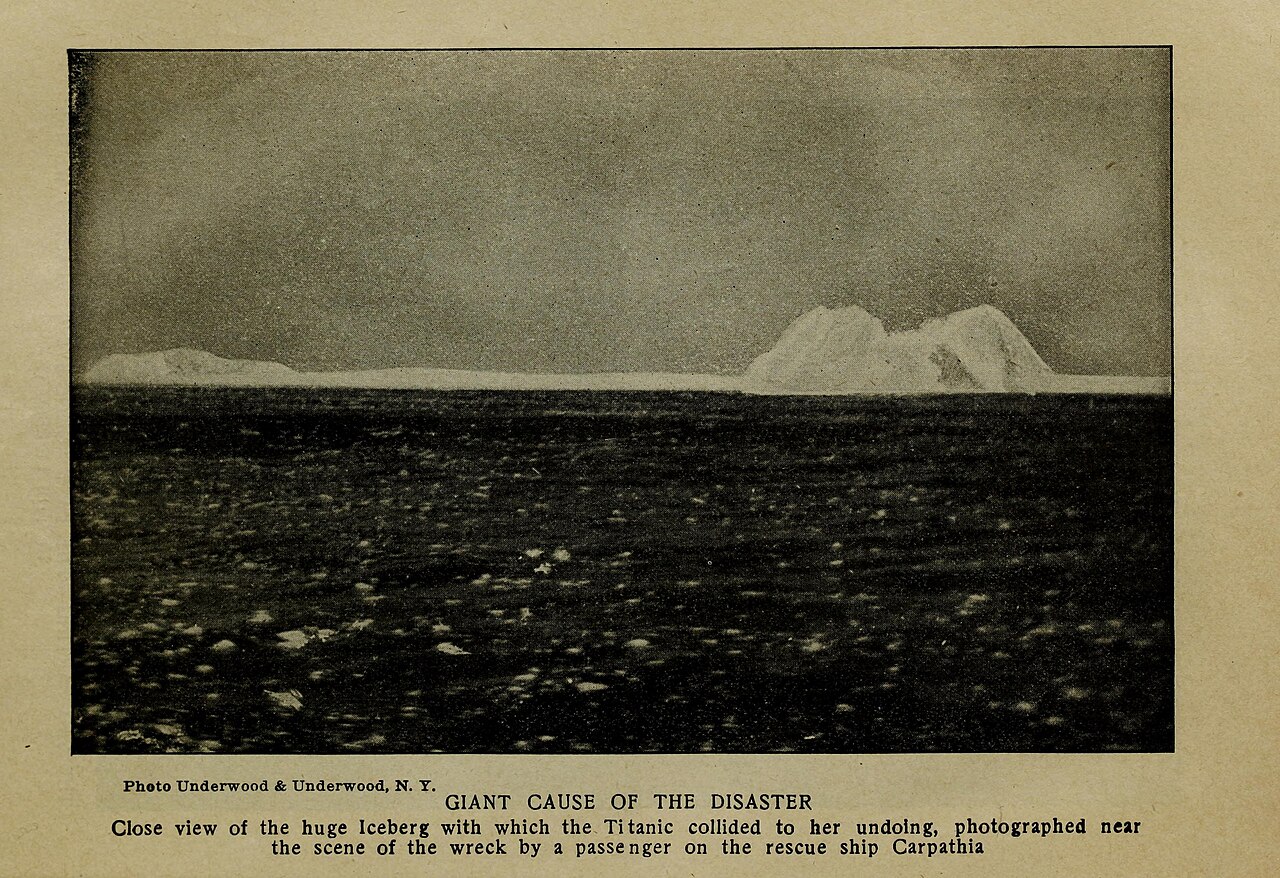

11:40 Pm “Iceberg right ahead.”
These words from the crow’s nest began the end of the largest ship afloat.
Lookout Frederick Fleet spotted the iceberg at about 11.39 pm. He rang the warning bell three times and telephoned the bridge.
Titanic, a ship of more than 46,000 gross tons, was travelling at about 22 knots, and the iceberg was only a few hundred metres away.
There were only about 37 seconds between the warning and the collision. The officer on watch, First Officer Murdoch, had to decide what to do in that time, and exactly what he ordered is still debated.
The most widely accepted account is that Murdoch ordered “Hard a-starboard”. This was an old-style tiller command, which actually turned the ship to port (left). He is also thought to have ordered the engines stopped or reversed. Titanic began to swing, but too late, and the iceberg scraped along her starboard (right) side below the waterline.
Did speed play a factor in the Sinking of Titanic?
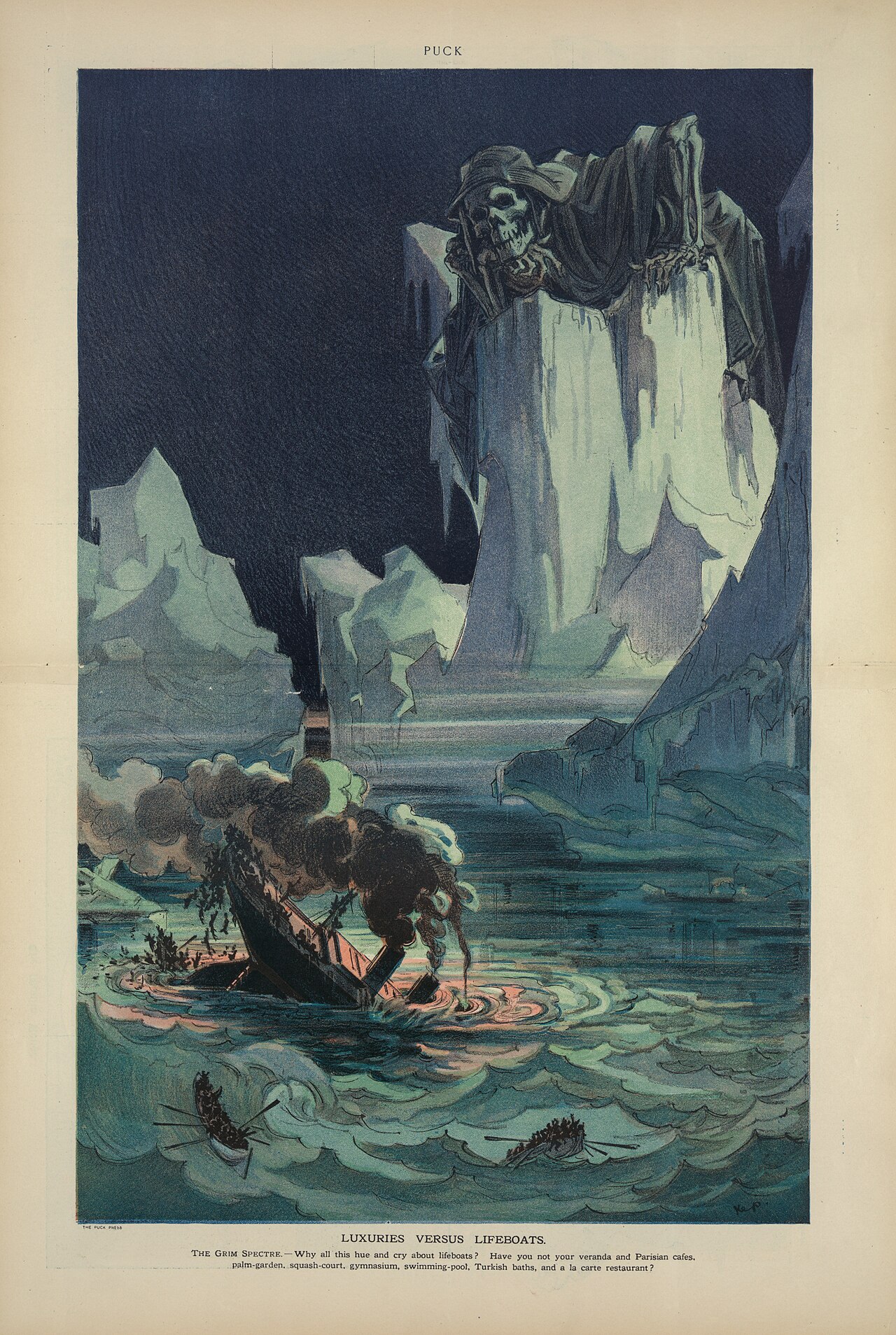
On deck and on the bridge, the collision felt like a long, shuddering scrape rather than a crash. Many passengers barely noticed it, and some even played with lumps of ice that had fallen onto the forward deck. At first it seemed possible that the ship had got away lightly.
“Just before going to my state room, A11, there was a bump. As I turned the handle of my room [door] there was another bump. As I got into my room, there was a third bump. One of these bumps… like little pushes, nothing violent. I slipped on a coat over my white satin evening dress, and went right out from my own state room because my state room had a door leading to the promenade deck. As I got out onto the promenade deck, I saw a large grey, what looked to me like a building, floating by. But that “building” kept bumping along the rail, and as it bumped it sliced off bits of ice [which] fell all over the deck. We just picked up the ice and started playing snow balls. We thought it was fun. We asked the officers if there was any danger, and they said, “Oh, no, nothing at all, nothing at all, nothing at all. Just a mere nothing. We just hit an iceberg.”
First Class Passenger Edith Louise Rosenbaum Russell, would later recount the immediate aftermath of the collision
Below decks it was a different story. The ship’s carpenter, John Hutchinson, and her chief designer, Thomas Andrews, inspected the damage and found water pouring in.
The iceberg had not torn one long gash in the hull. Instead it had buckled the steel plates and popped rivets along about 90 metres of the starboard side, opening a series of narrow gaps. Water was entering the forepeak, the three forward cargo holds and Boiler Room 6, and more was reaching Boiler Room 5.
The watertight doors were closed from the bridge. Titanic had been designed to stay afloat with any two compartments flooded, or with the first four flooded, but five were open to the sea. As the bow sank lower, water would spill over the tops of the bulkheads from one compartment into the next, like water filling an ice cube tray. Captain Smith, who had come straight to the bridge, ordered the engines stopped.
The death of a Titan.
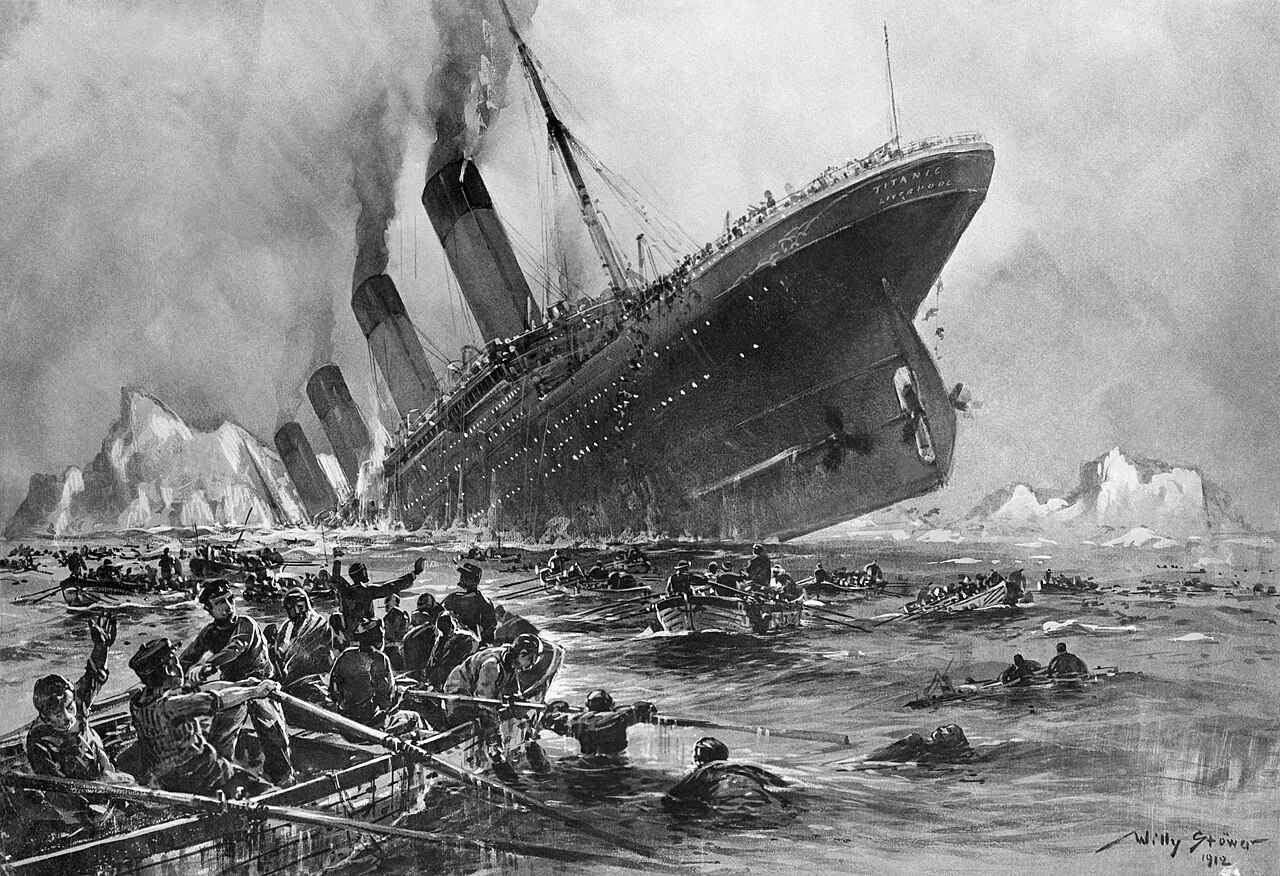
Andrews told Smith that the ship would sink, probably within an hour or an hour and a half. The pumps could slow the flooding but not stop it, because water was coming in far faster than they could remove it.
“Women and children first”: launching the lifeboats
At about 12.05 am, 25 minutes after the collision, Captain Smith ordered the crew to uncover the lifeboats and get the passengers up on deck. About twenty minutes later he gave the order to start loading women and children. The first lifeboat did not reach the water until about 12.45 am.
Many passengers did not rush to the boats. Titanic still felt warm, bright and steady, and few people believed the “unsinkable” ship was really in danger. The boat deck was also a deafening place to be.
The noise came from steam roaring out of the safety valves on the funnels. With the engines stopped, the boilers that had been working hard an hour earlier had to vent their steam to prevent an explosion.
Lifeboat 7, lowered first on the starboard side, carried only about 28 people, although it had room for 65. Titanic carried 20 lifeboats with space for 1,178 people, enough for only about half of the 2,224 on board and about a third of the number she could legally carry.
Shocking as this sounds, Titanic carried more lifeboats than the law required. The British Board of Trade’s rules had last been updated in 1894, and they based the number of lifeboats on a ship’s tonnage, not on how many people it carried. Any ship over 10,000 tons, including one of more than 46,000 tons, needed only 16 boats.
The disaster led directly to the first International Convention for the Safety of Life at Sea in 1914, which required enough lifeboat places for everyone on board.
First- and second-class passengers had staircases leading straight up to the boat deck. For third-class passengers, whose cabins were low down at the front and back of the ship, it was much harder. Many struggled to find their way through the maze of corridors, many spoke little English, and some gates between third class and the rest of the ship stayed shut for at least part of the night.
The result was stark. Nearly all of the first- and second-class women and children survived. Only one child from first or second class died, two-year-old Lorraine Allison from Canada, while more than half of the children in third class were lost.
By about 1.25 am the boat deck was becoming chaotic. It was now obvious to most people that there were far more people on board than places in the boats.
The boats were being filled and lowered more quickly, and the later boats left much fuller than the first ones.
The crew had never held a full lifeboat drill on Titanic and many did not know which boat they were assigned to, which made it harder to keep control. As Lifeboat 14 was lowered on the port side, Fifth Officer Harold Lowe fired his pistol into the air to stop men from jumping into the already crowded boat.
On the starboard side, Lifeboat 13 was pushed along by the stream of water pouring out of the ship’s side and drifted directly under Lifeboat 15, which was being lowered on top of it. People in Lifeboat 13 shouted and cut their ropes free just in time.
By about 1.35 am most of the boats on the after part of the boat deck had gone. Only a handful remained, with room for a few hundred people, while about 1,500 were still on board.
At around 1.40 am the bow dipped sharply and water began flooding the forecastle deck. The ship’s angle grew steeper, and many people on board now realised for the first time how serious things were. Some researchers believe a coal bunker fire earlier in the voyage had weakened the bulkhead between Boiler Rooms 5 and 6, though this is still debated.
Collapsible C was lowered at about 1.40 am and Collapsible D, the last boat lowered from the davits, at about 2.05 am. Lifeboat 4, which left at about 1.50 am, stayed close to the ship and later pulled several men from the water.
Titanic’s wireless operators gave her position as 41°46′N 50°14′W. When the wreck was found in 1985 it lay at about 41°43′N 49°57′W, around 13 nautical miles away.
WHERE DID TITANIC SINK?

Phillips and Bride sent distress calls for about two hours, first using the established signal CQD with Titanic’s call sign MGY, and later the newer signal SOS. Several ships heard them, including Mount Temple, Frankfurt and Titanic’s sister ship Olympic, but most were too far away. The nearest ship to respond, Cunard’s Carpathia, was 58 nautical miles away and would need about four hours to arrive. The calls were also picked up by the land station at Cape Race in Newfoundland, and news began to spread to New York and beyond.
02:00 – Waterline reaches forward boat deck
Early on, many passengers were reluctant to swap the warm, lit ship for a small, open boat on a freezing black sea, and this is one reason the first boats left so empty. Some officers also feared the boats might buckle if they were lowered fully loaded, even though they had been tested. Lifeboat 1, built for 40, left with just 12 people, including Sir Cosmo and Lady Duff Gordon. Sir Cosmo later gave each of the crew in the boat £5, which led to rumours of bribery, but the British inquiry cleared him. J. Bruce Ismay escaped in Collapsible C and was heavily criticised in the press. Others, including the priest Father Thomas Byles and Margaret Brown, helped women and children into the boats. Brown was eventually put into a boat herself and survived; Byles stayed behind and died.
As the deck tilted further, the boats began to leave fuller. Captain Smith’s order was “women and children first”. On the starboard side, First Officer Murdoch allowed men into the boats when no women or children were nearby. On the port side, Second Officer Lightoller treated it as “women and children only”. Even so, more than half of the women in third class died, while almost all of the women in first and second class survived.
By about 2.05 am the water had reached the bridge. Every boat had gone except Collapsibles A and B, which were stored on the roof of the officers’ quarters and were very hard to launch. Across all the boats that left, there were around 470 empty seats.
02:05 – Propellers exposed

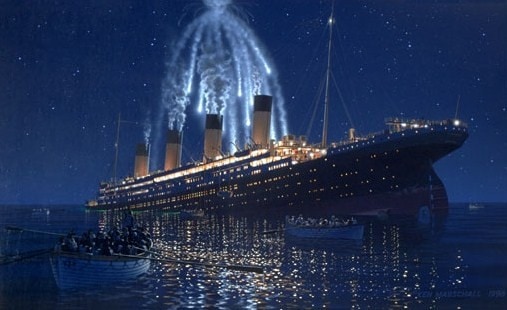
As the bow filled, the stern rose and the propellers began to lift out of the water. People climbed towards the stern or jumped into the sea, where the water was below freezing.
At about 2.10 am Captain Smith released the wireless operators from their duties. Bride later described finding a stoker trying to take Phillips’s lifebelt while Phillips was still sending, and the two operators fighting him off. They then left the wireless room. Bride went to help with Collapsible B and Phillips headed aft; Phillips did not survive.

Most of the lifeboats rowed away from the ship, fearing they would be pulled under by suction as she sank or swamped by people in the water. Afterwards, only one boat went back to look for survivors.
Collapsibles A and B were washed off the deck as the sea reached them: A partly flooded and B upside down, with dozens of men clinging to it. Soon afterwards the forward funnel broke loose and fell into the water on the starboard side, crashing down among the swimmers.
With so few lifeboat places, it may be surprising that any animals were saved, but three of the dogs on board survived: two Pomeranians and a Pekingese, each carried into a lifeboat by its owner.
Father Byles spent his last minutes praying with, and hearing the confessions of, the people gathered around him. The stern rose higher and higher. At about 2.17 am the ship’s lights, which had stayed on throughout, flickered and went out.
02:20 – Titanic’s final plunge
“And it wasn’t until we were in the lifeboat and rowing away, it wasn’t until then I realized that ship’s going to sink. It hits me there.”
Eva Hart, Titanic Survivor
Under the enormous strain, the hull broke apart between the third and fourth funnels. The bow section sank, and the stern briefly settled back before rising almost vertically and slipping under the surface at about 2.20 am, two hours and forty minutes after the collision.
Some survivors said the ship broke in two before she sank, but others disagreed, and both inquiries concluded that she had gone down in one piece. The question was settled only in 1985, when Robert Ballard’s team found the bow and stern lying separately on the seabed.
The two halves fell about 3,800 metres (12,500 feet) to the seabed and landed about 600 metres apart. The bow, which sank fairly smoothly, dug deep into the mud and stayed largely in one piece. The stern was badly torn apart on the way down and on impact, and debris was scattered over a wide area of the seabed.
TITANIC’S TOLL: SURVIVAL BY THE NUMBERS
Category
Children, First Class
Children, Second Class
Children, Third Class
Women, First Class
Women, Second Class
Women, Third Class
Women, Crew
Men, First Class
Men, Second Class
Men, Third Class
Men, Crew
TOTAL
Number Aboard
6
24
79
144
93
165
23
175
168
462
885
2223
% Saved
83%
100%
34%
97%
86%
46%
87%
33%
8%
16%
22%
32%
% Lost
17%
0%
66%
3%
14%
54%
13%
67%
92%
84%
78%
68%





The two official inquiries counted the people on board differently. The US Senate inquiry counted 2,223 people, of whom 706 survived and 1,517 died. The British inquiry counted 2,201, of whom 711 survived and 1,490 died. Using the British figures, 62% of first-class passengers survived, 41% of second class, 25% of third class and 24% of the crew. Almost all first-class women survived, compared with 86% in second class and fewer than half in third class.
Third-class women were still more likely to survive than first-class men: 46% compared with 33%. This shows how strongly the order to save women and children first shaped who lived and who died.
Every one of Titanic’s engineers died; they stayed at their posts keeping the lights and pumps running until the end. All eight members of the band, led by violinist Wallace Hartley, also died after playing on deck to keep passengers calm. Many people believe their last tune was the hymn “Nearer, My God, to Thee”, while others remember a waltz called “Songe d’Automne”. Most of the people who died in the water were killed by the cold within minutes, in water of about −2 °C. The lifeboats could have carried 1,178 people, but only about 710 were saved.
03:00 – Lifeboat rescues
Only one lifeboat went back. About an hour after the sinking, Fifth Officer Harold Lowe moved passengers out of Lifeboat 14 into other boats and returned to the wreck site, where he pulled a few people from the water; one of them, William Hoyt, died soon afterwards. Lifeboat 4, still nearby, rescued eight crew members, two of whom later died. Around 30 men spent the night balanced on the upturned Collapsible B, including Second Officer Lightoller and Harold Bride. In other boats, people argued about whether to go back, but many feared being swamped. Very few people were pulled from the water alive.

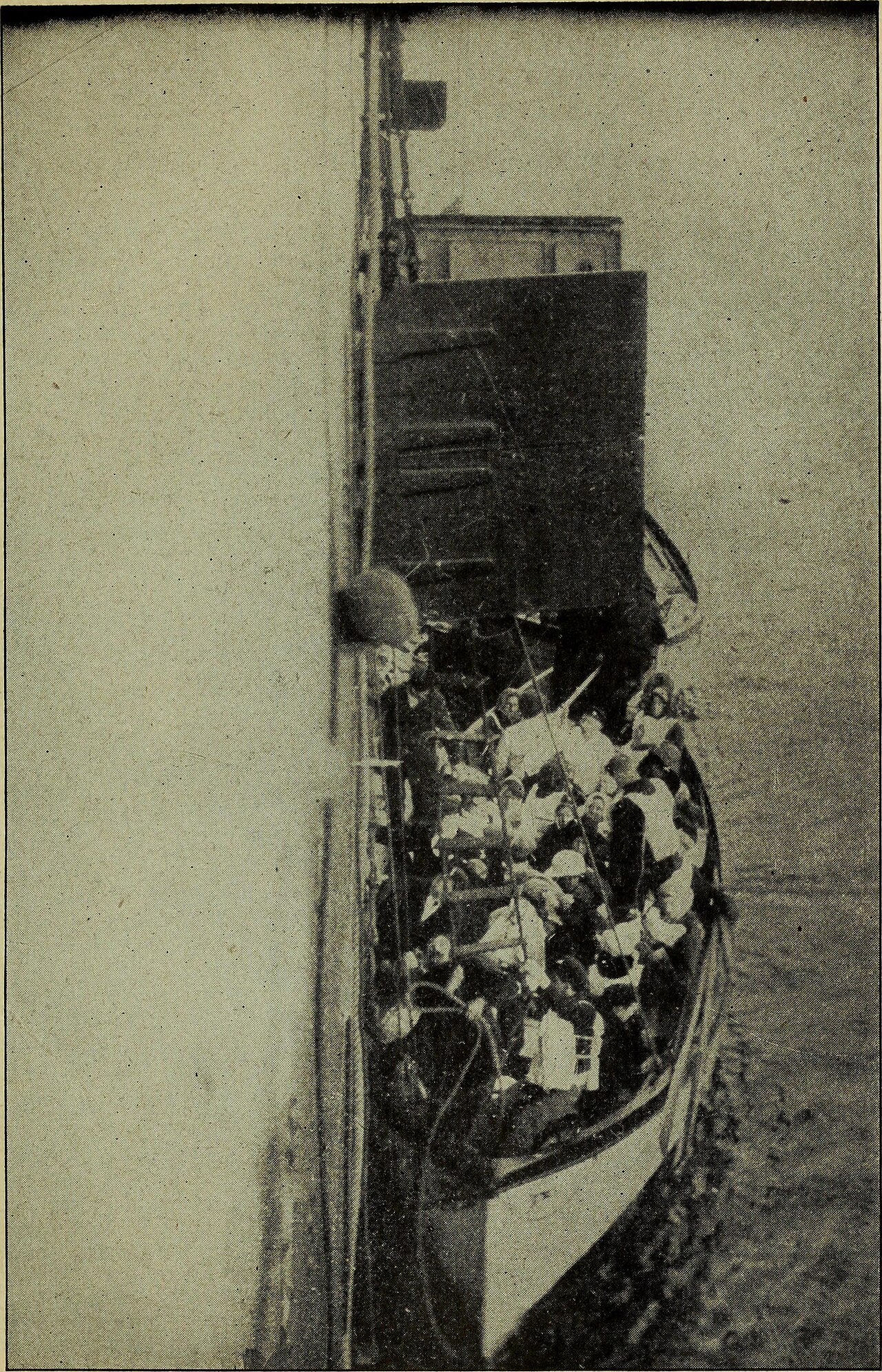
This photograph appeared on front pages around the world. It shows one of Titanic’s collapsible lifeboats approaching Carpathia on the morning of 15 April.
04:10 – Carpathia picks up the first lifeboat
Carpathia, commanded by Captain Arthur Rostron, arrived at about 4 am after racing through the ice at full speed. She picked up the first lifeboat at about 4.10 am and spent the next four hours collecting the rest. A short service was held on board for the survivors and for those who had died, and at about 8.50 am Carpathia set course for New York, arriving on the evening of 18 April.
On 17 April the cable ship Mackay-Bennett left Halifax, Nova Scotia, to recover bodies, carrying embalmers, ice and coffins. Her crew recovered 306 bodies, and 116 of them were buried at sea. Other ships joined the search, and in total 328 bodies were found. Most of the people who died were never recovered.
JAMES CAMERON EXPLAINS EXACTLY HOW TITANIC SANK IN THIS VIDEO
Did poor quality steel lead to the sinking of the Titanic?
In recent years much has been made of claims that Titanic was built from poor-quality steel that became brittle in cold water.
Tests on steel recovered from the wreck show that it contained relatively high levels of impurities such as sulphur and phosphorus, which made it more likely to crack rather than bend in freezing water.
But it is unfair to judge 1912 steel by what metallurgists have learned since.
Titanic’s steel was normal for its time. Thousands of ships were built from similar steel in the same era without problems.
Her sister Olympic was built in the same yard, to the same design and from the same kind of steel, and she stayed in service for more than twenty years before being scrapped in the 1930s.
Olympic even survived two collisions: with the cruiser HMS Hawke in 1911, and in 1918, when she rammed and sank the German submarine U-103.
Titanic would be built from better steel today, but any ship hitting an iceberg at more than 20 knots would suffer serious damage. The steel was one small link in a long chain of events, not the main cause of the disaster.
Frequently asked questions
How long did it take the Titanic to sink?
About 2 hours and 40 minutes. Titanic hit the iceberg at 11:40 pm on 14 April 1912 and sank at about 2:20 am on 15 April.
Why did the Titanic sink?
The iceberg buckled the hull and opened a series of narrow gaps along the starboard side. Water flooded the first five or six watertight compartments, one or two more than the ship could survive, so the bow sank lower until the ship broke apart and went down.
How many people died when the Titanic sank?
About 1,500 people died. The US Senate inquiry counted 1,517 dead and the British inquiry 1,490; the totals differ because the two inquiries counted passengers and crew differently.
Keep exploring: Titanic survivors · The Titanic inquiry · Teaching the Titanic? See our Titanic resources for teachers.